Iran oil exports 'near zero' as US blockade reshapes Gulf trade
Washington’s crackdown on Iran’s 'shadow fleet' ripples through global oil trade
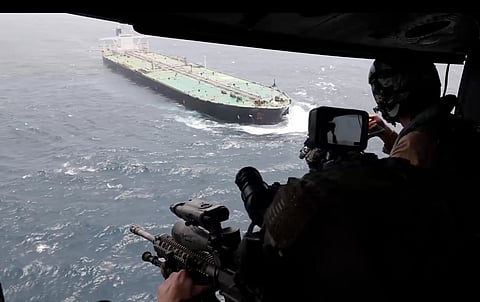
Iran’s crude exports have effectively disappeared from the international market as a US naval blockade, tighter sanctions and months of attacks have disrupted the country’s ability to move oil through the Gulf of Oman and into global markets.
TankerTrackers.com said not a single barrel of Iranian crude crossed the US Navy blockade line between the Gulf of Oman and Arabian Sea during the previous 60 days, citing the vessel-tracking data cited by the service.
Reuters separately reported that a US-enforced blockade on Iran-related shipping had halted Iranian crude exports since it was reimposed in mid-July.
The collapse in exports, however, has not produced the huge storage glut that might normally be expected when a major producer suddenly loses access to overseas buyers.
TankerTrackers estimates that Iranian crude production has fallen roughly to the level needed for domestic consumption and refining, leaving relatively little surplus oil to accumulate in storage. That suggests the export collapse is being accompanied by a major reduction in production rather than simply barrels piling up at Iranian terminals.
US pressure targets Iran's oil lifeline
The shipping blockade is only one part of Washington's effort to restrict Iranian petroleum revenue.
The US Treasury has spent months targeting Iran's shadow fleet, oil traders, shipping companies, financial intermediaries and foreign buyers.
In April, Treasury sanctioned China's Hengli Petrochemical refinery and about 40 shipping companies and vessels, saying the network provided a financial lifeline to Iran's oil industry.
In July, Treasury expanded the campaign against the shipping empire of Mohammad Hossein Shamkhani, identifying more than 50 individuals, companies and vessels involved in Iran's oil trade and sanctions evasion.
Washington escalated the campaign again in August with "Operation Economic Outcast", expanding sanctions exposure to shipping and other sectors and targeting networks accused of transporting Iranian crude and petroleum products. Treasury identified vessels that had moved millions of barrels of Iranian oil to China and other markets.
Treasury has also continued the campaign this month, saying its broader operation is aimed at cutting the financial channels used by Iran to smuggle oil and evade sanctions.
The effect is particularly significant because oil remains one of Iran's principal sources of hard-currency revenue. Treasury has repeatedly described Iranian petroleum sales as a major financial lifeline for the government and military.
Blockade 'changing economics' of Iranian oil
The naval blockade has effectively changed the economics of Iranian oil exports.
Iran can still produce crude and supply its domestic refineries, but moving additional barrels into international waters has become much more difficult.
Tankers face the risk of interception, attack, sanctions exposure and loss of insurance or financial services.
That helps explain why Tehran has increasingly relied on unconventional shipping arrangements and why some Iranian-linked vessels have attempted to conceal their movements.
The pressure has also reached Iran's broader maritime trade.
On Sept. 10, Tehran temporarily suspended a 10% freight charge imposed on foreign vessels transporting oil, gas and petroleum products to or from Iran.
Reuters reported that the measure was intended to reduce shipping costs and encourage foreign vessels to continue serving Iranian trade amid the US naval blockade.


