Burj Al Arab restoration: Why Dubai’s iconic hotel still defines luxury globally
Here is what makes Dubai’s sail-shaped icon timeless
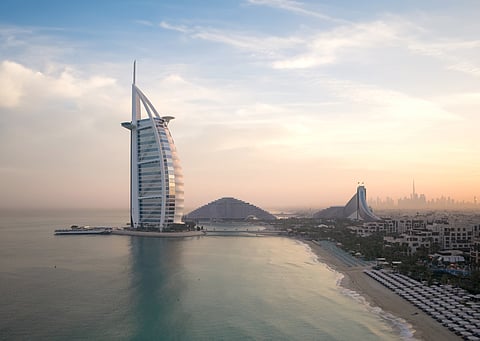
Dubai: As Dubai’s most recognisable hotel begins its first major restoration in more than 25 years, Jumeirah Burj Al Arab is entering a new chapter. Over the years, the hotel has become inseparable from Dubai itself.
In messages sent to guests, Jumeirah confirmed that the refurbishment follows long-term planning after more than 25 years of continuous operation, marking the first major renewal of a property synonymous with Dubai’s global image.
The hotel, owned by Jumeirah Group - a subsidiary of Dubai Holding, said the renovation is aimed at preserving one of the emirate’s most famous symbols for future generations.
Jumeirah announced on Tuesday that the dhow sail-shaped hotel — long regarded as an emblem of Dubai’s global luxury tourism ambitions — will begin a phased restoration expected to last around 18 months.
Thomas B. Meier, CEO of Jumeirah, said the restoration is about more than upgrading a hotel building. “Jumeirah Burj Al Arab is far more than an architectural landmark; it is a symbol of ambition, craftsmanship and enduring excellence,” he said.
Sail-shaped Dubai landmark
When Burj Al Arab opened in December 1999, Dubai was still emerging as an international tourism destination. The hotel instantly changed that.
Designed by British architect Tom Wright, the building was conceived to become for Dubai what the Sydney Opera House is for Australia – a national symbol.
Built on a man-made island 280 metres offshore in the Arabian Gulf, the structure rises 321 metres high and is connected to the mainland by a private bridge. Its sail-like silhouette is inspired by traditional Arabian dhow boats.
Few buildings anywhere in the world are as visually synonymous with their city as Burj Al Arab is with Dubai.
World’s only ‘seven-star hotel’
Though there is no official hotel classification beyond five stars, Burj Al Arab became globally famous as the “seven-star hotel” because of its extraordinary opulence.
At launch, journalists coined the phrase after seeing interiors featuring lavish gold detailing, towering atriums, rare marble finishes, and extravagant suite layouts.
Inside the hotel:
Around 1,790 square metres of 24-carat gold leaf decorate interiors
Marble sourced from Brazil and Italy lines walls and floors
The atrium soars over 180 metres high, among the tallest in the world
The name stuck — and became part of Burj Al Arab mythology.
Inside the Burj Al Arab suites: 198 rooms
Unlike conventional hotels, Burj Al Arab has no standard guest rooms.
Instead, it offers 198 duplex suites, each with panoramic views of the Arabian Gulf, designed so that every guest faces the sea.
Each suite includes:
Floor-to-ceiling ocean-facing windows
Dedicated 24-hour butler service
Living and dining spaces across two floors
From one-bedroom suites to royal presidential residences, the hotel’s design was intended to redefine hospitality as theatre.
The Burj Al Arab Helipad
If Burj Al Arab is iconic for its architecture, its helipad has become legendary for spectacle.
Over the years, the hotel’s helipad has hosted some of the most memorable publicity moments in global hospitality:
Tiger Woods’ Rooftop Golf Shot (2004)
Golf legend Tiger Woods famously teed off from the helipad, sending golf balls soaring above the Arabian Gulf.
Federer vs Agassi Tennis Match (2005)
Tennis icons Roger Federer and Andre Agassi played a surreal exhibition match atop the helipad, watched worldwide.
Formula One and Stunt Events
The helipad has also hosted Formula One car stunts, boxing rings, and extreme sports showcases — each reinforcing Burj Al Arab’s image as a stage for the extraordinary.
Burj Al Arab remains a stage for reinvention today. Its New Year’s Eve celebrations, including the spectacular 360-degree drone show in 2024, continue to capture global attention.
Dining experiences
The hotel’s restaurants are attractions in their own right.
Among its nine acclaimed dining venues:
Al Muntaha
Suspended 200 metres above sea level, this sky-high restaurant offers sweeping Dubai coastline views.
Al Mahara
Long famed for its immersive underwater-style ambience, it became one of Dubai’s most talked-about fine dining experiences.
Skyview Lounge
Known for sunset views, luxury afternoon teas and skyline panoramas.
For many visitors, dining inside Burj Al Arab became as aspirational as staying there.
Interior design
Interior designer Khuan Chew created the hotel’s interiors around the classical elements: Earth, air, fire and water.
This philosophy explains the vivid jewel tones, dramatic fountains, dancing water features, flame-inspired colours and sculptural textures throughout the property.
The renovation project will be led by acclaimed French interior architect Tristan Auer, chosen after what Jumeirah described as a rigorous selection process. Auer is known internationally for restoring celebrated heritage properties, including Hôtel de Crillon in Paris.
Brand Dubai
Before Burj Al Arab, Dubai was known primarily as a trading and transit hub. However, it is widely believed that after Burj Al Arab, Dubai became a destination synonymous with aspirational luxury travel.
The hotel helped put Dubai on the global luxury tourism map, attract ultra-high-net-worth travellers, and establish Jumeirah as an international hospitality brand. Its opening marked a turning point in Dubai’s economic diversification into tourism and hospitality.


