UAE elected to WFP Executive Board as Hormuz disruptions threaten global food security
The UAE’s election underscores its pivotal role within the global humanitarian ecosystem
The United Arab Emirates has been elected to the Executive Board of the World Food Programme (WFP) for the 2026–2028 term, at a time of unprecedented global food security challenges and mounting risks linked to the near-total disruption of traffic through the Strait of Hormuz—developments that could push tens of millions into acute hunger.
The UAE’s election underscores its pivotal role within the global humanitarian ecosystem. Dubai hosts the United Nations’ largest humanitarian logistics hub, strategically located near Jebel Ali Port and integrated with global supply chain support networks. This positioning enables rapid rerouting of humanitarian aid when maritime corridors are disrupted. The UAE has also activated alternative land corridors and launched an international air bridge that delivered critical supplies to more than 100 countries during the COVID-19 pandemic.
Get updated faster and for FREE: Download the Gulf News app now - simply click here.
Alternative lifelines for critical aid delivery
In parallel, the UN Humanitarian Response Depot in Dubai continues to activate alternative land, sea, and air corridors to ensure life-saving assistance reaches affected populations across Asia and Africa, despite delays hindering the delivery of tens of thousands of tons of aid.
The UAE’s accession to the WFP Executive Board marks a shift from a leading donor to a strategic partner, reflecting its vision of a world free from hunger. It also reinforces its commitment to linking humanitarian response with sustainable development and building more resilient food systems.
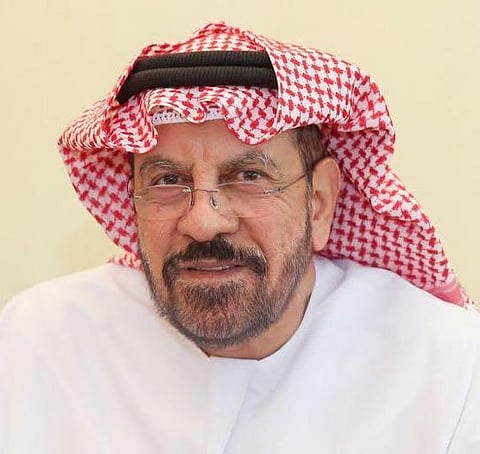
Ambassador Mohamed Abushahab, UAE Permanent Representative to the United Nations, stated: “Our membership on this Board strengthens the UAE’s role in shaping the strategic direction of the World Food Programme. We will work to place innovation, logistical efficiency, and resilient food systems at the core of the international response—today and in the future.”
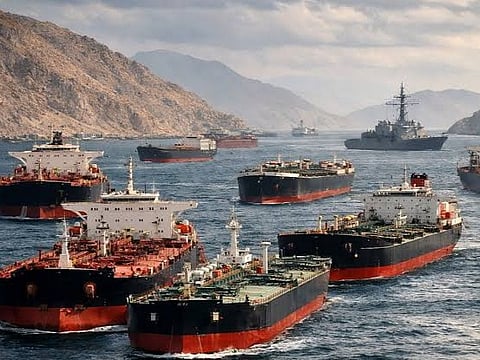
The UAE’s election comes at a critical juncture, as oil tanker traffic through the Strait of Hormuz has declined by more than 90% since 28 February 2026, amid escalating Iranian attacks on regional states and increasing threats to maritime security in this vital waterway.
Any threat to Hormuz is a threat to global food security
The Strait of Hormuz is one of the world’s most strategic maritime chokepoints, through which roughly one-fifth of global oil and liquefied natural gas supplies transit, along with one-third of global fertilizer trade. The Gulf region accounts for 25% of global natural gas, 20% of global oil, and approximately 70% of the world’s petrochemical feedstock. In addition, 33% of global fertilizers are exported from Gulf countries—making any disruption to the Strait a direct threat to global food security.
Illegal attacks on civilian vessels and the obstruction of an international waterway constitute clear violations of international law.
Prolonged disruptions could push 45 million into acute hunger
The United Nations has warned that continued disruption could drive an additional 45 million people into acute hunger, while a further 4 million people in the Arab world risk falling into poverty.
The UAE has reaffirmed its commitment to engaging in all relevant multilateral forums to counter unlawful actions by Iran and has expressed readiness to support any international initiative aimed at reopening and safeguarding the Strait of Hormuz. The UAE stresses that protecting freedom of navigation is a collective responsibility essential to ensuring global economic stability, preventing the escalation of crises, and guaranteeing that food reaches those in need.
The UAE further emphasizes that using maritime routes as leverage or a tool of economic coercion constitutes economic warfare and piracy—an unacceptable practice that threatens global supply chains and economic stability far beyond the region.
Iran bears full responsibility for the disruption of the Strait of Hormuz through its unlawful and hostile actions targeting GCC states and other friendly nations, including attacks on civilians and critical infrastructure, and threats to international maritime routes—actions that represent flagrant violations of international law and cannot be justified or tolerated.
UAE to lead efforts to ensure food reaches those in need
As a member of the WFP Executive Board, the UAE will spearhead efforts to ensure the delivery of food assistance to those most in need, regardless of challenges affecting global supply chains or threats to food security.
In a related development, the UAE was re-elected for the second consecutive time on 8 April 2026 to the Executive Board of UN Women for the 2026–2028 term, reflecting its commitment to advancing gender equality and empowering women and girls worldwide. The UAE was also elected, alongside Saudi Arabia, India, and China, to the Committee on Non-Governmental Organizations for the 2027–2030 term.