UAE residents' update: Dubai explosion report probe, flight cancellations and security alerts amid US-Iran tensions
Strait of Hormuz on edge as UAE residents advised to monitor travel, security
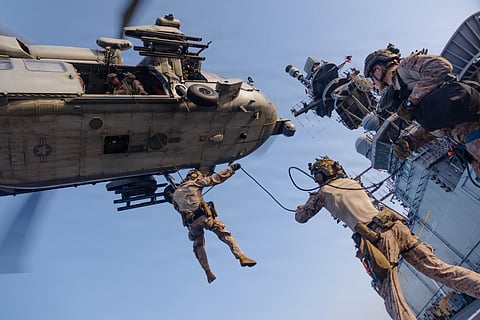
Dubai: The Middle East crisis intensified on Saturday as the United States and Iran exchanged strikes for a seventh consecutive night, with tensions rising around the Strait of Hormuz and concerns growing over regional security.
The escalation has triggered flight disruptions, security alerts and infrastructure damage across parts of Kuwait, Bahrain and Jordan.
Get updated faster and for FREE: Download the Gulf News app now - simply click here.
Here's a roundup of the key developments and what they mean for UAE residents.
UAE investigates false Dubai explosion report
The UAE Public Prosecution has expanded its investigation into a false report claiming explosions were heard in central Dubai.
Attorney-General Counsellor Dr Hamad Saif Al Shamsi said authorities had questioned the reporter and summoned those involved in preparing, approving and publishing the report to examine whether legal and professional verification procedures were followed.
The investigation will determine responsibility and any legal action required. The withdrawal of the report and an apology issued by the news agency do not affect the ongoing probe.
Reuters withdraws Downtown Dubai booms report
Reuters has retracted a July 16 report claiming witnesses heard explosions in Downtown Dubai, saying it did not meet its editorial standards.
The news agency said it could not verify the source or significance of the reported sounds before publication. Reuters said it withdrew the report and published a follow-up statement from Dubai Media Office denying the claim.
Dubai authorities had earlier warned that action would be taken against organisations publishing false or unverified information about the emirate.
UAE flights update
UAE airlines continue to adjust schedules as regional tensions affect air travel across parts of the Gulf.
UAE-Kuwait flights
Emirates has cancelled multiple Dubai-Kuwait services through July 19, while Etihad Airways has listed its Abu Dhabi-Kuwait flights as “awaiting update”.
Air Arabia has also updated flight statuses for services between Sharjah, Abu Dhabi and Kuwait.
Passengers travelling to or from Kuwait are advised to check directly with their airline before heading to the airport.
Saudi flights
Flights between the UAE and Saudi Arabia have also been affected. Dubai-Abha and Sharjah-Abha services remain disrupted, with passengers advised to confirm flight status before travelling.
Gulf and international airlines
Several Gulf carriers are gradually restoring or expanding services, including Qatar Airways, Oman Air, SalamAir, Gulf Air, Saudia and Kuwait Airways.
Some international airlines, including Air Astana, Air Canada, KLM, Lufthansa Group, Singapore Airlines and Cathay Pacific, continue to have temporary suspensions or changes affecting some Middle East routes.
Passengers are advised to monitor airline updates and allow extra time for possible schedule changes.
US issues Middle East travel warning
The US Department of State has advised citizens to reconsider travel to or through the Middle East amid rising regional tensions.
The advisory said the security environment remains complex and could escalate without warning. Travellers were urged to monitor developments and check with airlines for possible flight disruptions.
Seventh night of US strikes on Iran
US strikes Iran for seventh night: US Central Command (CENTCOM) said American forces targeted surveillance sites, military logistics infrastructure, underground weapons storage facilities and maritime capabilities.
Two US troops killed in Jordan: The US military said two service members were killed and one is missing after Iranian missile and drone attacks on a base in Jordan.
First US deaths from Iranian fire: CENTCOM said the fatalities are the first US military deaths caused by direct Iranian attacks since the conflict began.
Four troops discharged: Four service members who were evacuated to Jordanian hospitals have since been released. The identities of the two killed troops have not been disclosed.
Iran warns US of ‘unforgettable lessons’
Iran’s Supreme Leader Mojtaba Khamenei warned the United States of “unforgettable lessons” as fighting between Tehran and Washington intensified on Saturday, accusing the US of violating a framework deal aimed at ending the conflict.
Khamenei questions US commitments: In a statement carried by Iranian state television, Khamenei said US actions after the agreement showed that the US president’s signature was “worthless”.
Warning to Washington: He said Iran and its allies would deliver “unforgettable lessons” if the US continued its military actions.
Iran threatens escalation: Tehran said US strikes targeted civilian infrastructure, including an airport, railway station and bridges, and warned it could resume “full-scale offensive operations” if attacks continue.
Framework deal dispute: Khamenei accused Washington of violating the terms of the agreement, leading to renewed hostilities between the two sides.
Kuwait reports damage to key facilities
Kuwait reported damage to an oil facility and a power and water desalination plant following Iranian strikes.
Kuwait Petroleum Corporation said one of its vital oil facilities was hit, causing injuries and material damage.
The Kuwait Fire Force said firefighters and a worker were injured while responding to fires caused by the attacks.
Kuwait temporarily closed its airspace following missile threats, while Kuwait Airways announced changes to its flight schedule.
Gulf countries report interceptions
Iran said it targeted US military facilities in Kuwait and Jordan in response to American strikes.
Jordan said its air defence systems intercepted Iranian missiles and drones, with no casualties or major damage reported.
Bahrain activated air raid sirens after incoming attacks and said its air defence systems had thwarted Iranian threats.
The UAE strongly condemned renewed Iranian attacks targeting Bahrain, Kuwait and Jordan, calling them violations of sovereignty and threats to regional stability.
Strait of Hormuz remains under pressure
The Strait of Hormuz remains a key focus of the conflict, with shipping activity sharply reduced.
The waterway previously carried around a fifth of global oil and gas shipments. Oil prices rose above $86 a barrel as vessel crossings declined.
Iran has called for greater control over the strait and proposed transit fees for ships, while the US has increased pressure on Iranian shipping routes.
Iran reports casualties from US strikes
Iran’s Health Ministry said US attacks since July 6 have killed at least 50 people and injured more than 500 others.
Health ministry spokesperson Hossein Kermanpour said those killed included five women and two children. He added that 28 surgeries had been performed, 460 people discharged and 37 remained hospitalised.
Regional tensions continue
Iran said it struck US military targets in Kuwait and Jordan, while the US confirmed additional injuries among its service members.
The US military said 13 more personnel — 10 Army soldiers and three Navy sailors — had been injured since Monday. Since the conflict began, 14 US service members have been killed and 427 wounded.
The conflict began on February 28 with US-Israeli strikes on Iran, followed by Iranian retaliation across the region.
What UAE residents should watch out for
Check flight updates before travelling: Passengers flying to Kuwait, Saudi Arabia or other regional destinations should confirm their flight status with airlines before heading to the airport, as schedules may change at short notice.
Follow official sources: Residents should rely on updates from UAE authorities, airlines and official government channels, and avoid sharing unverified reports on social media.
Expect possible travel disruptions: Airlines across the Gulf continue to adjust operations, with some services suspended or delayed due to regional security developments. Travellers should allow extra time and check for changes before departure.
Monitor regional security updates: The situation across the Gulf remains fluid, with ongoing military activity, air defence alerts and security developments in neighbouring countries.
Shipping and oil markets under watch: Activity through the Strait of Hormuz continues under heightened security measures, while global oil markets remain sensitive to developments affecting the key energy route.
Daily life remains normal in UAE: No changes have been announced to public services, workplaces or daily activities. Residents are advised to stay calm, follow safety guidance and use verified information sources.
The UAE continues to monitor regional developments closely. Residents and travellers are advised to remain alert, follow official instructions and stay updated as the situation evolves.


